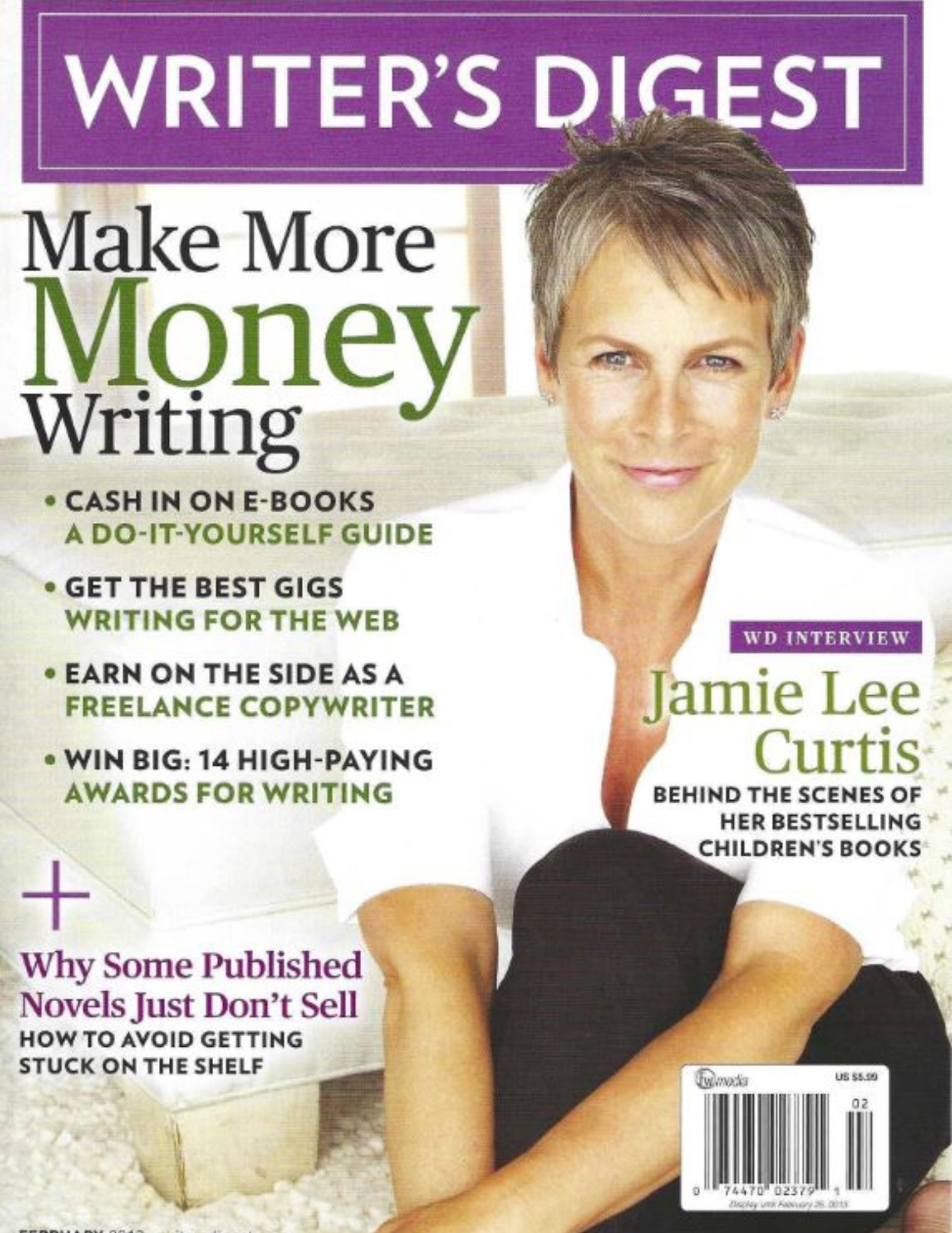
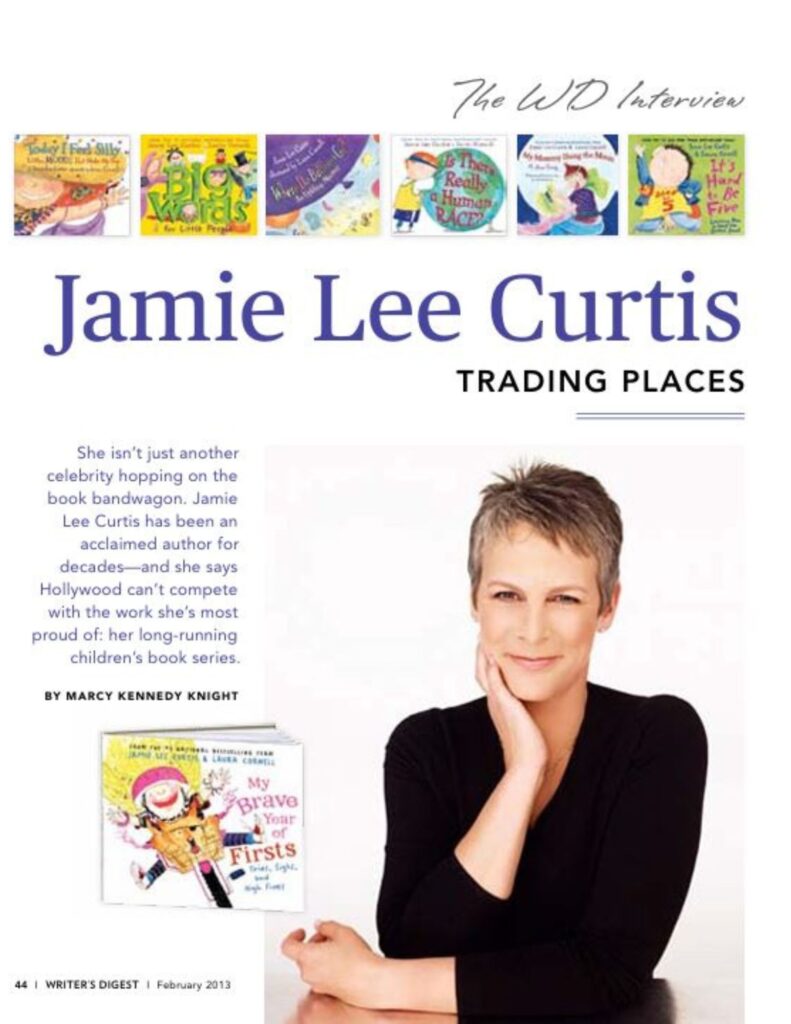
Most people know her as the daughter of Hollywood legends Janet Leigh and Tony Curtis, and the star of such hit films as A Fish Called Wanda, True Lies and Halloween. So it may surprise you to learn that her favorite role is actually that of author.
“These books have been gifts,” she says. “These are my best things. They are the best translation of who I am … the purest expression of what I think and feel and the way I look at the world.”
Curtis isn’t just one of the latest celebrities to dip a toe into the publishing world—she’s a No. 1 New York Times bestseller who has been writing children’s picture books for more than two decades, since the 1993 debut of When I Was Little: A Four-Year Old’s Memoir of Her Youth, the first in her Books to Grow By collection.
Illustrated by Laura Cornell, the long-running series includes Today I Feel Silly & Other Moods That Make My Day; Big Words for Little People; I’m Gonna Like Me and other books with, to borrow Curtis’ word, intent. While maintaining an air of fun for adults and children alike, the collection focuses on self-esteem, imagination, selfcontrol, confidence and adventure. The 10th installment, My Brave Year of Firsts, was released in September. And it delivers more of Curtis’ signature approach: infusing her stories with touching, poignant insights, humor and emotion drawn from her own experiences as a mother. In addition to frequenting the bestseller lists, Curtis has garnered prestigious recognitions, including the International Reading Association/Children’s Book Council Children’s Choice award and the School Library Journal Best Book award. From her home in California, she discussed with WD the passion that drives her writing, the path that led her to become a children’s book author, and the “secret sauce” that tops each of her beloved titles.
You’ve published 10 books. Is the feeling for the 10th book different from the first?
Every time I publish a book, it’s like [people think] I’m jumping on somewhat of a celebrity bandwagon. It’s shocking what people have said to me out of their ignorance. It’s funny—I mean, my daughter’s 26 years old. I’ve been doing this for 22 years already.
We take it for granted that people pay attention to everything. … When I talk about it, they say, “Oh, I didn’t know you did that.” They talk about it like it’s a cute pet. Like a hobby—like I do stained-glass plant holders. And they say, “Oh, that’s lovely.” At this point, I no longer attempt any sort of book-ography—I just look at them and say, “Yes, I’ve been writing for 22 years, and this is my 10th book.”
How do you plan what you’re going to write next?
None of these books have ever been planned. … The first book was written because my 4-year-old walked into my office—I remember where I was sitting—in her very 4-year-old-y, stumpy, chubby, delicious way, and said, “When I was little, I wore diapers. Now I use a potty.” She just kind of stomped out, and obviously she had been in her room, thinking about her past and how miraculous being a 4-year-old was. I started to laugh as she left the room. And I wrote down on a pad on my desk, “When I Was Little: A 4-Year-Old’s Memoir About Her Youth.” Which made me laugh because 4-year-olds don’t have a youth. Four-year-olds are youth. …
I started to write down a list of things that she was not able to do at one point, and now she could do them. Some of them were funny, and some of them, poignant. Like, “When I was little I didn’t know I was a girl, or had blue eyes. My mom told me.” Things about selfunderstanding and self-ownership. At the end, I started to cry. At the end of this list I wrote, “When I was little, I didn’t know what a family was. When I was little, I didn’t know what dreams were. When I was little, I didn’t know who I was, but now I do.” And at that, I had tears pouring down my face, and I thought, Oh my!
This is a book.
So, I called the only literary agent I knew. I had “agents” up the wazoo, but I didn’t have a literary agent because I wasn’t a writer.
No hesitation? At any point, did you question, Am I really writing a book?
No—the book was written. That was it. Every book that I’ve ever written, it’s been written in that first flush of creativity. Every single book that I’ve written has popped out of my head and [been] written within minutes. They’ve come out intact—complete.
You are going to be the envy of so many authors.
No, no, no. These books come out in a creativity flow. Some people can just flow. You tap into that place in you, and you let the words come. … I mean, I’ve written books on napkins; I’ve written books on the back of magazines. They come out very quickly. And then it takes two years to shape, mold, edit, shift here, shift there, change entire stanzas. But the inherent book, the intent of the book, it was there, and it was never created with any premeditation. None.
Do these books reveal who the real Jamie Lee Curtis is?
I am like everyone. I am whimsical. I have magical moments. I have incredibly frustrating and challenging moments. These books are the autobiography I never have to write. They are my best thing. The more I stay out of the way of a result or an expectation and just let it flow, then I end up looking at the pile of books that I’m looking at right now on my desk—I’m signing them for some charities—and I go, Oh my goodness, look what happens when you stay out of your own way, Jamie. Look what happens when you don’t try to force a solution, force a success on something. ’Cause I’m a schmoozer, as you can tell. … It is part of my job, and I do it with a lot of spirit and a lot of fun. But these books are such a pure pleasure for me to talk about. I am so insanely proud of them.
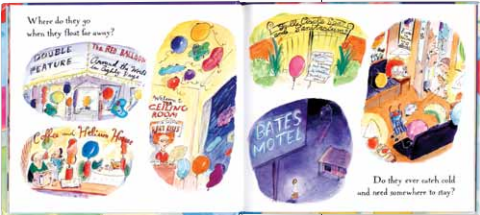
Here’s the secret. Here is the unknown, unexpected, unplanned secret sauce of my literary career: I write books for children and adults. I never knew that [at first]. But I think the reason our books have been so wildly successful is that there are musical lines for each audience at the same time. Simultaneous messaging. … These are books to be read by adults to children, and in that interchange, in that magic triangle of a child on a lap, parent holding the book and reading, the adult must be engaged. Because if the adult is engaged, the child will be engaged—because the adult changes when they are interested in something. In the book Where Do Balloons Go?, it reads:
Where do they go when they float far away? Do they ever catch cold and need somewhere to stay?
Well, where these balloons go to stay is the Bates Motel. Now, both you and I are going to laugh. We’re going to laugh out loud. We’re going to think that that is so unbelievably cool. And it’s a book for 4-year-olds. We’ve put [in] a reference to Psycho. And I have a personal relationship with Psycho.
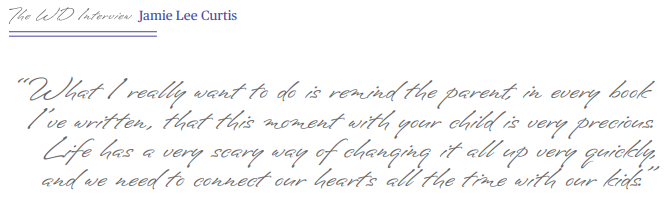
[Illustrator Laura Cornell and I] don’t write books that have continuing characters; we don’t write books that are dull and stupid; we don’t write books that are dumbed down to some supposed childlike state. They are wickedly funny and very emotional, which is the other criteria that I demand of myself: When I finish a book, if when I read it, it does not move me to tears, there’s something wrong with it and I have to address it and learn what that is and why. Because at the bottom line of our lives, we are human. Being human is hard and scary, and deeply emotional. And my experience with writing is if I can’t connect that dot between the parent and the child—not that I’m expecting the child to get bummed out, don’t get me wrong—[but] what I really want to do is remind the parent, in every book I’ve written, that this moment with your child is very precious. It’s short. Life has a very scary way of changing it all up very quickly, and we need to connect our hearts all the time with our kids because it is so fleeting. We all know that, anyone who has raised a child. Fleeting. It’s over. Then they get pimples and they smell.
What do you hope parents get out of reading your books to their kids?
What I hope is that they enjoy reading it. Whatever the book is about, that it creates some dialogue, some way of communicating with their 4- to 8-year-old. That they can find a way in. That the language and intent of the book, be it self-esteem, loss and letting go, creativity, selfcontrol … that it opens up an avenue of communication which is open and free where people can go, “When I was learning to ride a bike I fell a thousand times.” The goal of a book like this is to connect physically, connect emotionally, and then to open up communication and use these books as a jumping-off point to talk about whatever it is.
Do your books have a universal theme, and if so, what is it?
The bottom line is, I want to relate. I want my readers to relate, [on] both sides. I want the parents to relate. I want the kids to relate. I want them to relate to each other. The tools I use are language, color and humor. I produce the language and a little bit of humor, and Laura Cornell produces all of the colors. So much of the humor is from her twisted sister mind.
Do you think that being “Jamie Lee Curtis” has made it more difficult or easy for you as a writer? You know what, this is a question I leave to the world. Of course, a public person doing anything gets looked at; it’s
just the nature of being public. I am also the daughter of famous parents, and you can also say that about my work as an actor. I can’t make a comment about it. I am most proud of these books. They are my best thing. They are my best offering to the world. And if being a famous actor made 5 million books be sold, then that’s great. From what people tell me, that’s not the case. But I can’t answer that question because I don’t have that perspective.
Has your success as an author surprised you?
The success of these books is so surprising to me. … I remember when I was in my car [and] my very big cell phone went off and my publicist … called me and said, “Did you know your book has already sold 50,000 copies?” This was way early, when I didn’t connect the dots that people actually buy them. I didn’t factor that in. I was so thrilled just to have this book in my hands. I was so satisfied with it. It was so perfect that I never even thought, Oh, right, someone might buy it. And so the success of these books has been an astonishing gift from the moment it began. With my intent, with my heart and my mind— my uneducated mind, by the way, my never-ina-million-years-wouldI-think-I-could-writea-book kind of mind, barely-got-out-of-highschool mind—the idea that between Laura and myself, we’ve been able to produce 10 books together that have intent, that have gravitas, that have tremendous humor, is my best thing that I can offer the world. And it has been a real unexpected treasure of my life. WD
Marcy Kennedy Knight (marcy-passiononline-info.stackstaging.com/) is an award-winning freelancer who has written for television, consumer and trade publications, literary journals and the theater.