
A Memorial Built for the Nation: The Story of the John F. Kennedy Center for the Performing Arts
How a president’s vision for American culture became a national memorial—and why its identity is about far more than a name on a building.
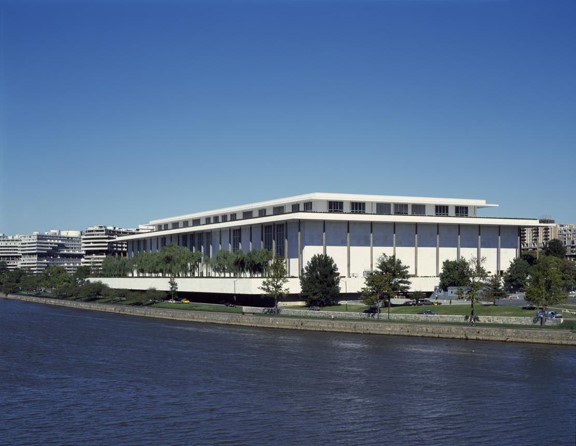
In the heart of Washington, D.C., beside the Potomac River, stands a great white marble building devoted to music, theater, dance, opera, and the extraordinary power of the performing arts. Its grand halls welcome audiences from across the country and around the world. Its stages give life to stories, preserve cultural traditions, and introduce new generations to the transformative experience of live performance.
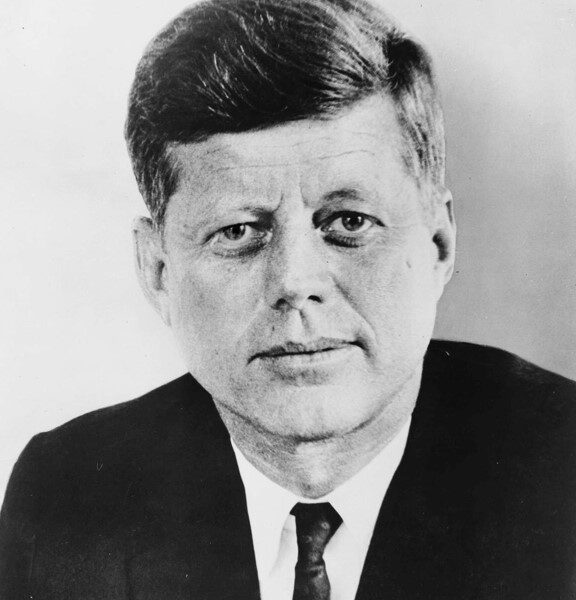
But the Kennedy Center for the Performing Arts was conceived as something more enduring than a cultural venue. It was created as a living memorial to President John Fitzgerald Kennedy, whose presidency inspired Americans to imagine a country that could lead not only through its political and military power, but also through its creativity, intellectual curiosity, and commitment to the arts.
The story of how the Kennedy Center came into existence is a story of presidential ambition, congressional action, private generosity, public responsibility, and a national determination to honor a fallen leader. It is also a story about what happens when a memorial becomes part of the nation’s civic identity—and why the institution’s founding purpose matters as much today as it did more than six decades ago.
A president who believed the arts mattered
When John F. Kennedy took office in January 1961, the United States was competing with the Soviet Union for global influence. The Cold War was being fought through military strength, scientific achievement, technological innovation, and competing visions of society. Yet Kennedy and his wife, Jacqueline Kennedy, understood that a nation’s cultural life was also a measure of its vitality.
The arts were not simply entertainment for the privileged. They could express the nation’s ideals, encourage independent thought, preserve its heritage, and bring people together across differences.
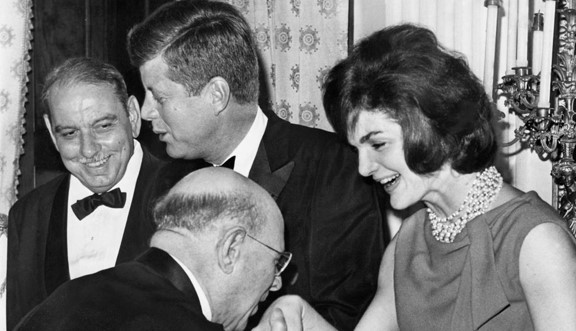
Jacqueline Kennedy helped transform the White House into a more visible center of cultural life. Distinguished musicians, writers, artists, and performers were welcomed into the presidential residence. The celebrated cellist Pablo Casals performed at the White House in 1961, an event that symbolized the administration’s interest in bringing artistic excellence into the public consciousness.
The president also supported the idea that the United States should have a major national institution dedicated to the performing arts. Washington possessed museums, monuments, and government buildings, but it lacked a great national center that could serve as a permanent home for theater, music, ballet, and opera.
The idea was not entirely new. Advocates had spent years seeking a suitable performing arts center for the capital. In the late 1950s, congressional action helped establish the National Cultural Center as a proposed national institution. Kennedy embraced the project and lent it the authority of the presidency.
The vision was ambitious: a place where artistic achievement would be celebrated as an essential part of American life.
Then, on November 22, 1963, Kennedy was assassinated in Dallas, Texas.
The proposed cultural center suddenly acquired a much deeper meaning. The nation had lost its president, and Americans were searching for a way to honor his memory that would outlast ceremonies, speeches, and the immediate grief of a national tragedy.
A performing arts center offered an answer. Rather than commemorate Kennedy solely through stone and inscription, the nation could honor him through a living institution—one that would continue to create, perform, teach, and inspire.
From a national cultural center to a national memorial
The project that would become the Kennedy Center did not begin with Kennedy alone. Its origins reach back to the administration of President Dwight D. Eisenhower, who signed the National Cultural Center Act into law on September 2, 1958. The legislation authorized the creation of a national cultural institution in Washington.
Eisenhower recognized that a great capital should offer more than monuments to political leaders and military victories. It should also provide a home for the performing arts, demonstrating the nation’s cultural achievements to its own citizens and to the world.
The challenge was turning that vision into reality. The project required land, architectural planning, substantial fundraising, congressional support, and an organization capable of bringing together the many interests involved.
One of the central figures in that effort was Roger L. Stevens, a real estate entrepreneur and theatrical producer who became chairman of the National Cultural Center’s board of trustees. Stevens was instrumental in advancing the project, organizing fundraising efforts, and keeping the ambitious undertaking alive through years of obstacles. Architect Edward Durell Stone designed the building, envisioning a monumental structure that would stand prominently along the Potomac River.
Kennedy supported the project during his presidency. In November 1963, the administration was pursuing a major fundraising campaign to help make the center a reality.
Then came the assassination.
In the aftermath of Kennedy’s death, the cultural center’s purpose changed forever. Congress moved to formally dedicate the institution to the fallen president, and on January 23, 1964, President Lyndon B. Johnson signed Public Law 88-260, renaming the National Cultural Center the John F. Kennedy Center for the Performing Arts.
The legislation did more than change a sign. It established the center as the sole national memorial to Kennedy within Washington and its surrounding area.
Congress had made a deliberate choice: Kennedy’s memorial would not be merely a statue, a plaque, or a silent monument. It would be a living institution devoted to the arts and open to the American people.
The law’s significance remains unmistakable today. The center’s identity was established through federal legislation, not through a private naming arrangement or the preference of an individual officeholder.
Building a monument that would come alive
Construction took years, and the project faced financial and organizational difficulties. But the building eventually emerged as one of the capital’s most recognizable cultural landmarks.
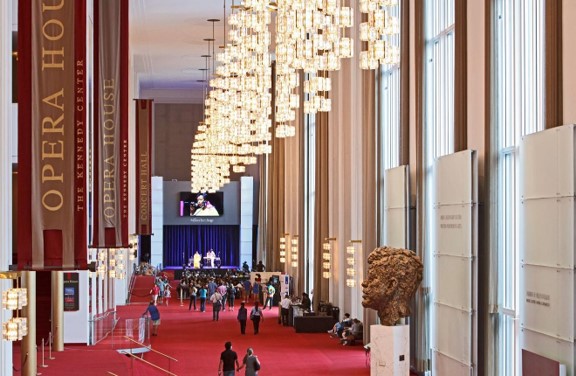
The Kennedy Center officially opened on September 8, 1971. Its inaugural performance was Leonard Bernstein’s Mass, a work commissioned for the occasion and presented in the Opera House. The Concert Hall opened the following evening with a special performance by the National Symphony Orchestra. The Eisenhower Theater followed in October.
The building’s architecture conveyed a sense of scale and permanence. Its broad terraces, formal columns, sweeping interior spaces, and views of the Potomac established a setting worthy of a national institution. Yet the building was never intended to be the entire memorial.
The performances were the point.
An orchestra playing Beethoven, a dancer interpreting a new work, an actor bringing a playwright’s words to life, a singer performing opera, or a young student discovering the theater for the first time—each became part of the memorial’s purpose.
That is what distinguishes the Kennedy Center from a conventional monument. A statue can preserve a likeness. An inscription can preserve a few carefully chosen words. A living cultural institution can preserve and renew the values it was created to honor.
Its legacy is renewed every time an audience gathers, a performer steps onto a stage, or a student discovers a new form of artistic expression.
The law that protects the Kennedy Center’s identity
The Kennedy Center’s name and purpose are protected by more than custom or public sentiment. They are addressed in federal law.
Three provisions of the United States Code are particularly important.
- Congress established its name in law.
Under 20 U.S.C. § 76i, the institution is designated the John F. Kennedy Center for the Performing Arts. The name is part of the statutory framework governing the center, not simply a label that its leadership may freely replace.
- Congress explicitly designated it as Kennedy’s national memorial.
Under 20 U.S.C. § 76q, the center is designated the sole national memorial to the late John Fitzgerald Kennedy within Washington and its environs. This provision makes the memorial’s identity an express part of federal law.
- The law restricts additional memorials inside the center.
Under 20 U.S.C. § 76j(b), the law limits the installation of additional memorials or memorial-like plaques in public areas, subject to specified exceptions. The statute reinforces the principle that the center’s public spaces are not an unrestricted canvas for personal tributes.
These protections matter because they establish a distinction between managing an institution and changing the purpose for which Congress created it.
The center has a board of trustees responsible for governance, operations, and artistic programming. But a board’s authority is not unlimited. Like other governing bodies, it must act within the powers granted to it by law.
Nor does the presidency itself automatically confer the power to rewrite a statute. Under the system of checks and balances, Congress enacts federal laws, and courts can determine whether government officials and institutional leaders have acted within those laws.
The distinction is fundamental: the authority to administer a national memorial is not the same as the authority to redefine whom it memorializes.
When the courts must defend the original purpose
The legal protections surrounding the Kennedy Center are not merely theoretical.
In 2026, litigation over attempts to change the institution’s name and add memorial-style references to another president brought the statutory safeguards into sharp focus.
In Beatty v. Trump, a federal district court examined the law governing the center and concluded that its board had exceeded its authority by attempting to rename the institution and place additional commemorative lettering on its façade.
In its May 29, 2026, ruling, the court emphasized that Congress had explicitly established the center’s name and restricted additional memorials in public spaces. The court’s reasoning was direct: the governing board could not unilaterally change the name Congress had chosen.
The ruling illustrates an essential feature of American government: even a powerful institution’s leadership must operate within statutory limits. A vote by a board does not automatically override a federal law, and political influence does not itself create legal authority.
The center’s protections also extend beyond its name. The National Trust for Historic Preservation has explained that elements of the Kennedy Center have been found eligible for the National Register of Historic Places, bringing relevant federal preservation-review requirements into consideration when government actions may affect historic resources. Such protections do not freeze every building decision in place, but they can require review and consultation before certain changes proceed.
National Trust for Historic Preservation
No single safeguard makes a national institution immune from every possible alteration. Laws can be amended through the legislative process, court rulings can be appealed, and buildings require maintenance and renovation. But the combination of statutory designation, limits on board authority, judicial review, and applicable preservation requirements creates meaningful barriers against unilateral changes to the center’s identity.
A living memorial belongs to the people
There is another reason the Kennedy Center’s founding story matters: it was conceived as a national institution, not a personal possession.
The original legislation envisioned a cultural center serving the American people. Its purpose was to preserve, foster, and transmit the performing arts traditions of the United States and other countries. Congress later expressly affirmed that a living institution of the performing arts was a fitting memorial to Kennedy because of his devotion to education, cultural understanding, and the arts.
That mission is bigger than any individual administration, political party, board chair, or donor.
A president may influence national priorities. A board may change leadership. An institution may renovate its facilities, update its programming, and adapt to changing audiences. These are ordinary aspects of organizational life. But a national memorial raises a different question: Who has the authority to redefine its historical meaning?
In the case of the Kennedy Center, Congress answered that question when it passed the legislation naming the institution and establishing its memorial role. The law remains the foundation for its identity, and the courts have demonstrated that those statutory boundaries can be enforced.
This does not mean the center belongs to one political family, nor does honoring Kennedy require every American to agree with his policies or legacy. A national memorial can be appreciated by people with very different political beliefs. Its purpose is to preserve an important part of the nation’s history and to serve the public through the mission established by law.
That principle is precisely why its legal protections matter. Without them, the identity of a national memorial could become vulnerable to the preferences of whoever happened to hold power at a particular moment.
The same principle applies to the nation’s other enduring institutions. Their value comes not merely from the people whose names they bear, but from the public purposes they are meant to serve.
What should endure
John F. Kennedy’s life was cut short before he could see the cultural center that had been developed during his presidency reach completion. Yet the institution that bears his name became a lasting expression of a vision he shared with others: that art, education, and cultural exchange are essential to a flourishing democracy.
The Kennedy Center’s history began before Kennedy became president. Its construction continued after his death. Its opening came nearly eight years after his assassination. Its survival depended on the work of architects, trustees, artists, lawmakers, donors, and generations of Americans who believed the arts deserved a national home.
That long history is important because it shows that the center was never the creation of one person alone. Its original cultural vision was a collective undertaking, and its transformation into a Kennedy memorial was a deliberate act of Congress.
Its most enduring tribute is not the marble exterior or the lettering above its entrance. It is the music that fills its concert hall, the plays that challenge audiences to think differently, the dancers who push the limits of human expression, and the young people who encounter the arts and discover possibilities they had never imagined.
A living memorial is meaningful because it continues to live out the values it commemorates.
The Kennedy Center was established to honor a president who believed in the importance of culture and the arts. Its name was placed in federal law, its public mission was defined by Congress, and its governing structure was bound by those statutory requirements. These are not trivial administrative details. They are the safeguards that help preserve the difference between public stewardship and personal ambition.
Ultimately, the Kennedy Center’s story is about more than the preservation of a name. It is about the principle that some national institutions are entrusted to serve purposes greater than the individuals who temporarily oversee them.
A memorial to a fallen president should not be treated as an empty space awaiting a new inscription. It represents a decision made by the nation, recorded in law, and carried forward through decades of public service and artistic achievement.
And the strongest way to honor that decision is to protect the institution’s founding purpose—not simply as a matter of history, but as a commitment to the generations who will walk through its doors in the years to come.
References:
The following references are formatted in Chicago-style bibliography format, with legal materials cited in standard legal form.
- Congress of the United States. National Cultural Center Act. Public Law 85-874, 72 Stat. 1698. Approved September 2, 1958. https://www.govinfo.gov/content/pkg/USCODE-2011-title20/html/USCODE-2011-title20.htm.
- Congress of the United States. Joint Resolution Providing for Renaming the National Cultural Center as the John F. Kennedy Center for the Performing Arts, Authorizing an Appropriation Therefor, and for Other Purposes. Pub. L. No. 88-260, 78 Stat. 4–5. Approved January 23, 1964. Smithsonian Institution Archives. https://siarchives.si.edu/collections/siris_sic_4924.
- United States Congress. United States Code. Title 20, § 76i, “John F. Kennedy Center for the Performing Arts.” Office of the Law Revision Counsel, U.S. House of Representatives. https://uscode.house.gov/view.xhtml?req=granuleid:USC-prelim-title20-section76i.
- United States Congress. United States Code. Title 20, § 76j, “Duties of Board.” Legal Information Institute, Cornell Law School. https://www.law.cornell.edu/uscode/text/20/76j.
- United States Congress. United States Code. Title 20, § 76q, “Sole National Memorial to the Late John F. Kennedy Within the City of Washington and Environs.” Legal Information Institute, Cornell Law School. https://www.law.cornell.edu/uscode/text/20/76q.
- United States District Court for the District of Columbia. Memorandum Opinion, Civil Action No. 1:25-cv-04480 (CRC). May 29, 2026. U.S. Government Publishing Office. https://www.govinfo.gov/content/pkg/USCOURTS-dcd-1_25-cv-04480/pdf/USCOURTS-dcd-1_25-cv-04480-1.pdf.
- Smithsonian Institution Archives. “Kennedy Center Opens.” Chronology of Smithsonian History. September 8, 1971. https://siarchives.si.edu/collections/siris_sic_909.
- Zvonchenko, Walter. “Presenting a Stage for a Nation: Exhibition Portrays Genius of Roger L. Stevens.” Library of Congress Information Bulletin, May 2002. https://www.loc.gov/loc/lcib/0205/stevens.html.
- National Park Service. “Setting the Stage for a National Park for the Performing Arts.” U.S. Department of the Interior. https://www.nps.gov/articles/000/setting-the-stage-for-a-national-park-for-the-performing-arts.htm.
- National Trust for Historic Preservation. “Kennedy Center: Frequently Asked Questions.” March 23, 2026. https://savingplaces.org/stories/kennedy-center-faqs.